Your customers already call you about their doors. Now you can add phones to them.
GateStride adds hands-free phone entry and a record of who left to the access control an office already owns. You keep the locks, readers and panels where they are, mount a small node at each door, and set it up from your phone in under a minute. Locksmiths get the same partner terms as integrators.
By Tom Jin · October 2026 · Early access
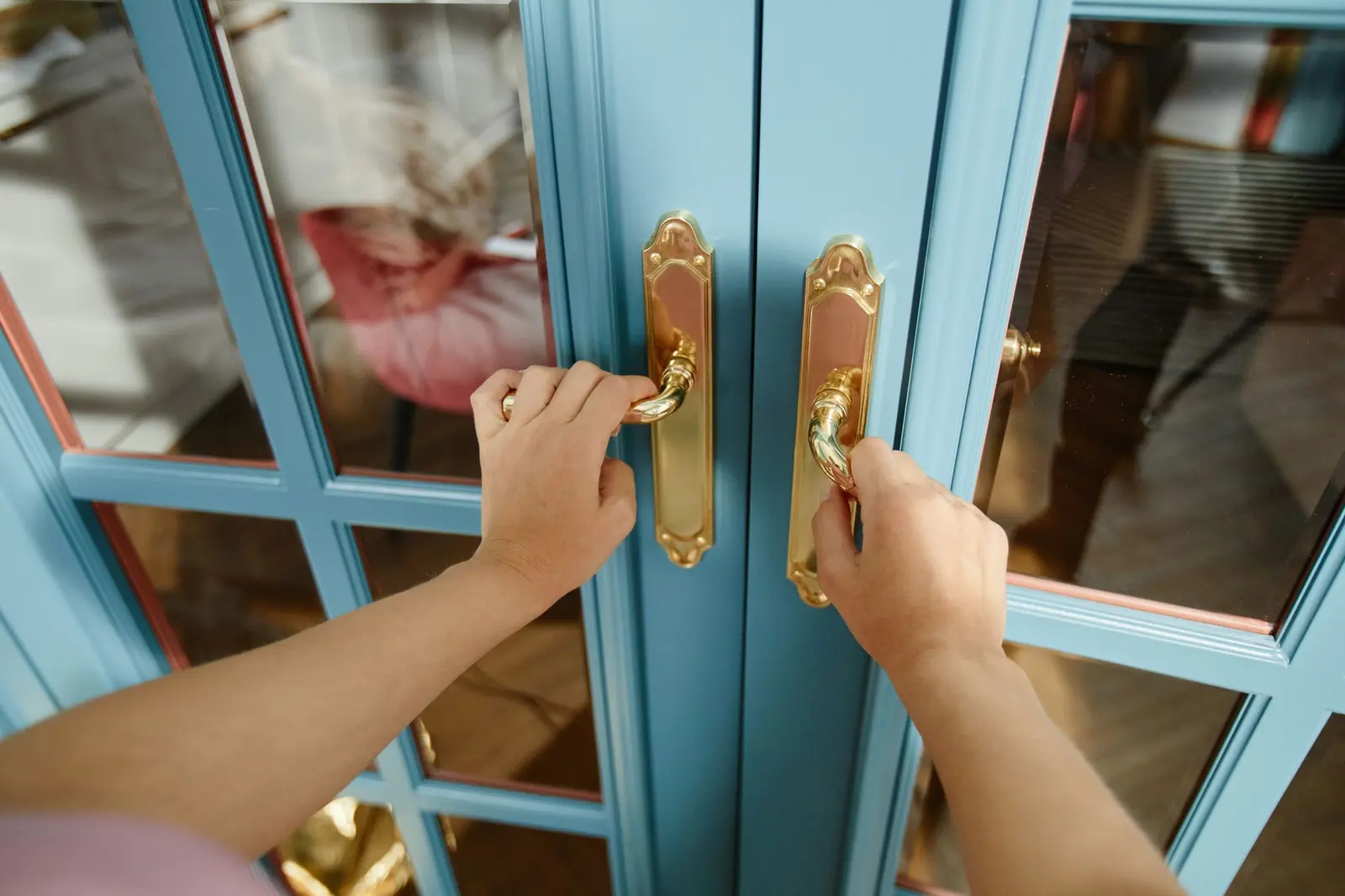
Why locksmiths, and why now
When an office manager has a problem with a door, the first call is often to a locksmith. A lost key, a sticking strike, a lock to rekey after someone leaves. You know the building, the doors and the person who signs the invoice. What you usually do not get is the next conversation: “Can our staff open the door with their phones?” or “How do we know who is still inside when the alarm goes off?” Those questions tend to go to a security integrator or a cloud vendor, and the answer is usually to replace the whole system.
GateStride lets you answer them yourself, on the hardware already in the wall. We built it after renting an office where the previous tenant had left a four-door Kantech system. It worked, but it only logged who came in, and staff waved cards and wallets at the readers all day. We did not want to rip it out, so we added phones to it. That story is here. Most offices are in the same place: a working system they paid for, and two or three things it cannot do.
What the job looks like
You do
- Confirm the customer’s system and doors (we help)
- Mount a door node at each covered door
- Set each door up with the DoorSmith app over Bluetooth
- Test each door with an enrolled phone
- Stay the customer’s go-to for the doors
You do not touch
- Locks, strikes and maglocks
- Readers, controllers and panels
- Request-to-exit and free egress
- Fire release and the certified life-safety path
- Cards and fobs already issued
The door node is an off-the-shelf small device we configure, with Bluetooth receivers and a radar presence sensor. It unlocks through the customer’s existing system, so there is no new lock hardware and no re-wiring of the life-safety path. The GateStride center runs in the customer’s comms room. There is no GateStride cloud, and nothing depends on a vendor relay. How it works explains the architecture.
Set up a door in under a minute with DoorSmith
Most access control jobs slow down at the network: finding an IP address, asking IT for a port, joining a Wi-Fi network that changes its password. DoorSmith skips all of it.
- The customer’s GateStride center shows a one-time claim code for the door.
- Open DoorSmith on your Android phone; it finds the nearby door node over Bluetooth.
- Enter the claim code. The door node joins that customer’s center and nowhere else.
- Walk through with an enrolled phone to test entry and exit. The door is live.
No IP address, no port, no site Wi-Fi to join, and it keeps working behind NAT and through changing DHCP addresses. Approved installers get signed DoorSmith builds. Read more about installer setup or see the apps.
What you earn
Locksmiths get the same terms as integrators. You buy GateStride at partner pricing and set your own price to the customer, so every door you add earns a resale margin on top of your labour. Customer pricing from GateStride is a flat quote with no per-user fees, which makes it an easy yes for a small office. Leads in your area are routed to you, and we do not sell around our partners. You can also get a free listing on the city pages you serve, with the systems you work on, where owners look for someone to service their doors.
It also gives a mechanical locksmith business a straightforward step into electronic access work: the customer already has the panel and readers, so the job is adding a node and setting it up, not designing a system from scratch.
Check your license first
Electronic access control is licensed work in many states, and a locksmith license does not always cover it.
Texas example. The Texas Occupations Code defines a locksmith company by mechanical security devices such as deadbolts and locks (§1702.1056). Installing or maintaining an electronic access control device needs an electronic access control device company license (§1702.1025), and the person doing the work needs an electronic access control device installer license (§1702.2226). Alarm systems companies may also install electronic access control (§1702.105). These licenses come from the Texas DPS Private Security Program. Source: Texas Occupations Code ch. 1702 and rules, as published by DPS.
Other states differ. Our city pages cover the licensing rules for each city we serve, and the table below summarises them. This is general information, not legal advice; confirm with your state’s licensing board before you quote.
City by city: does a locksmith licence cover it?
We checked the rules behind each of our city pages in October 2026. Each city page has the detail and the source.
| City | Locksmith licence covers access control? | What you need for the work |
|---|---|---|
| Houston, Dallas, Austin, San Antonio | No (mechanical only) | DPS electronic access control device company + installer licences |
| Los Angeles | Yes (BSIS) | Plus CSLB licence (e.g. C-7) for jobs $1,000+ or needing a permit; LAPD locksmith permit |
| San Francisco, San Diego | Yes (BSIS) | Plus CSLB licence (e.g. C-7) for jobs $1,000+ or needing a permit |
| Chicago | Yes (IDFPR) | Plus a City of Chicago electrical contractor licence, or a state private alarm contractor licence registered with the city |
| New York | No (mechanical only) | DOB electrician licence; NY State alarm installer licence if the system reports intrusion |
| Boston | No locksmith licence | Class D systems technician + Class C systems contractor, and state security-system licence |
| Philadelphia | No locksmith licence | Philadelphia Electrical Contractor License (covers low-voltage) |
| Washington, DC | No locksmith licence | DC electrician licence, e.g. Master Electrician Limited (Low Voltage) |
| Atlanta | No locksmith licence | Georgia low-voltage contractor licence (LV-A or LV-U) |
| Miami, Tampa | No (county licences ended 2025) | Florida Limited Energy Specialty, Alarm System Contractor or Electrical Contractor licence |
| Detroit | No locksmith licence | Michigan electrical contractor licence; Detroit BSEED registration |
| Minneapolis | No locksmith licence | Minnesota Technology System Contractor (or Electrical) licence with a Power Limited Technician |
| Seattle | No locksmith licence | L&I electrical contractor licence (06 Limited Energy) + installer certificates; SDCI permit |
| Phoenix | No locksmith licence | ROC licence such as C-67 for jobs $1,000+ or needing a permit |
| Denver | No locksmith licence | Denver Access Control System Supervisor certificate, contractor licence and Access Control Permit |
Which systems it works on
GateStride is in early access. It is verified on Kantech EntraPass. LenelS2 OnGuard and Brivo are in development, and Honeywell, Software House and HID are planned. If you are not sure what a customer has, our guide to identifying an access control system helps, and the compatibility list shows the current status. Tell us what you see most in your area and we will prioritise it.
Locksmiths and integrators
We work with two kinds of installer partners. Security integrators often installed the customer’s system in the first place and hold the service contract. Locksmiths are often the ones the office calls first about a door. Both get the same terms, the same DoorSmith app and the same lead routing. If you are an integrator, the integrator program page is written for you.
Questions
- Do I need to be an access control specialist?
- No. GateStride does not replace the panel, the readers or the wiring. You mount a small door node per door and set it up with the DoorSmith app over Bluetooth. You do need the license your state requires for electronic access control work.
- Is my locksmith license enough in Texas?
- Not on its own. Texas defines a locksmith company by mechanical security devices such as deadbolts and locks. Installing or maintaining an electronic access control device needs an electronic access control device company license (Occupations Code 1702.1025), and the individual installer needs an electronic access control device installer license (1702.2226). Alarm systems companies may also do this work. Check with the Texas DPS Private Security Program.
- Are the terms different from the integrator program?
- No. Locksmiths get the same partner terms as integrators: partner pricing with a resale margin you set, leads in your area routed to you, a free directory listing, and the DoorSmith installer app.
- What if the customer has no access control system yet?
- GateStride is an add-on. It needs an existing access control system to sit on top of. During early access it is verified on Kantech EntraPass; check the compatibility list for other systems.
- Does GateStride change the lock, the exit button or the fire release?
- No. Locks, strikes, request-to-exit and fire release stay with the existing certified system. GateStride never requires anything to exit.
- Do I need a laptop, an IP address or the customer’s IT team?
- No. DoorSmith finds the door node over Bluetooth and you enter a one-time claim code from the customer’s GateStride center. There is no IP address to set, no port to open and no site Wi-Fi to join.
Become a GateStride locksmith partner
Tell us where you work and which systems you see. We will send partner terms and get you DoorSmith.
Stock photo. Kantech, EntraPass, LenelS2, OnGuard, Brivo, Honeywell, Software House and HID are trademarks of their respective owners. GateStride is independent and not affiliated with or endorsed by them.